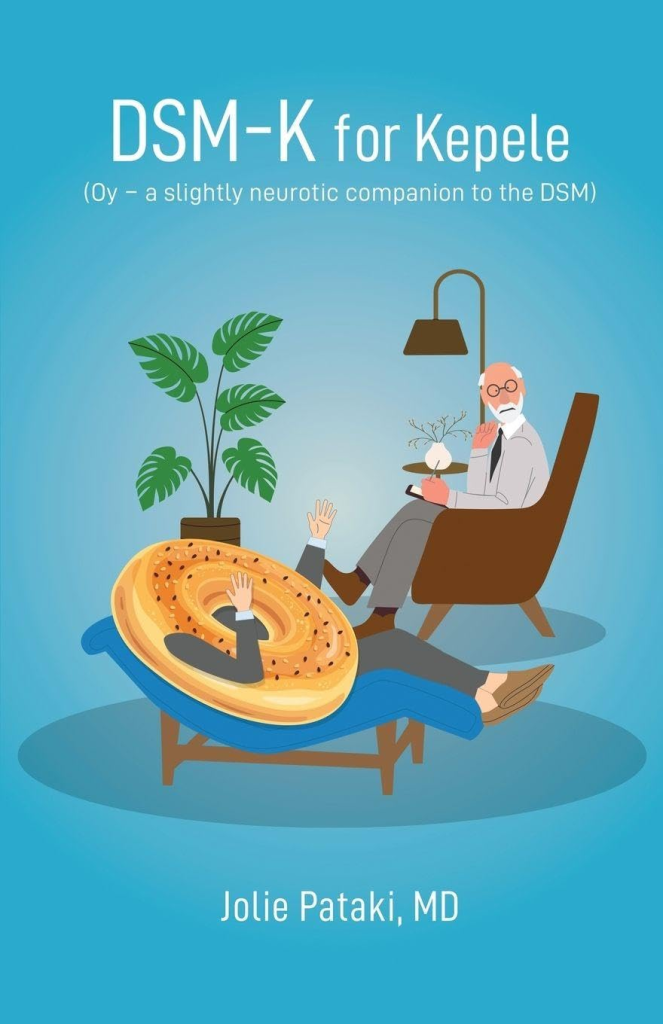
Psychiatric language can often feel cold. Terms like “generalized anxiety disorder” or “somatic symptom disorder” are accurate in a clinical sense, but they rarely capture the way people actually live and describe their struggles. That is where Yiddish comes in. With its humor, warmth, and expressiveness, Yiddish offers a vocabulary that gets closer to the human experience. Dr. Jolie Pataki’s DSM-K for Kepele shows just how powerful this cultural language can be when describing behavior, emotions, and all the little mishegos that make us who we are.
You can almost hear the tone of voice, see the hand gestures, and sense the never-ending barrage of complaints when someone is a “kvetch.” It goes beyond simply having a complaint disorder. It is a way of life that blends anxiety, discontent, and occasionally even love. That is why the idea of Kvetch Disorder in DSM-K for Kepele makes people laugh: It feels real and describes what we see every day.
Clinical jargon, by contrast, often misses that richness. A psychiatrist might say “dysfunctional expressive communication.” A Yiddish speaker would say the child has “Michering Disorder,” meaning they are fussing in a way nobody quite understands. Both point to the same behavior, but one is dry and technical, while the other is colorful, relatable, and even compassionate.
Humor is part of this difference, too. Yiddish rarely speaks in straight lines. It exaggerates, teases, and shrugs. That humor softens the edges of behavior that might otherwise be seen as purely negative. When Dr. Pataki writes about Plotz Attacks, she is describing panic attacks. But she does so in a way that allows us to laugh at their familiarity, even as we recognize the real struggle behind them. Humor does not erase seriousness—it helps us hold it.
Yiddish also gives us cultural depth. A term like “verklempt” does not just mean overwhelmed. It can mean pride, sadness, joy, or even being choked up with too many feelings at once. Try translating that into a single clinical term, and you will fall short. But in Yiddish, one word is enough to say it all. Psychiatry can learn from this richness. The way people describe their own emotions often carries more truth than the textbook definition.
Another example is “meshugenah.” In English, we might say “a little crazy,” but “meshugenah” is not cruel. It is often used with affection, even when pointing out someone’s quirks. That balance of honesty and care is something psychiatry strives for. Patients want to be understood, but they also want to feel accepted. Yiddish captures that balance naturally.
The lesson here is not that psychiatry should abandon clinical language. Doctors need precision to diagnose and treat. But it is worth remembering that patients live their lives outside of textbooks. They talk in stories, in family jokes, in cultural expressions. DSM-K for Kepele bridges those worlds by showing how Yiddish can describe human behavior in ways that feel more human.
In the end, Yiddish reminds us that behavior is not just a set of symptoms. It is part of a larger story, shaped by culture, humor, and connection. Words like kvetch, plotz, and farklempt do not just explain what is wrong. Instead, they tell us who we are and what we can do to improve our lives. That is something clinical jargon will never quite capture.
For more information and insight, please read DSM-K for Kepele. Head to Amazon now: https://www.amazon.com/dp/1968966498/.