Psychiatry is serious work. For example, it deals with the struggles people carry in their minds and the labels we attach to those struggles. Yet even in this weighty field, laughter has a place. Dr. Jolie Pataki’s DSM-K for Kepele proves just that. Through the alter ego of Dr. Fackacta, she takes the language of psychiatry and gives it a Yiddish twist. This creates a manual that is equal parts clever parody and cultural insight. In doing so, instead of reducing human complexity to cold clinical terms, she shows how humor can illuminate, connect, and even heal.
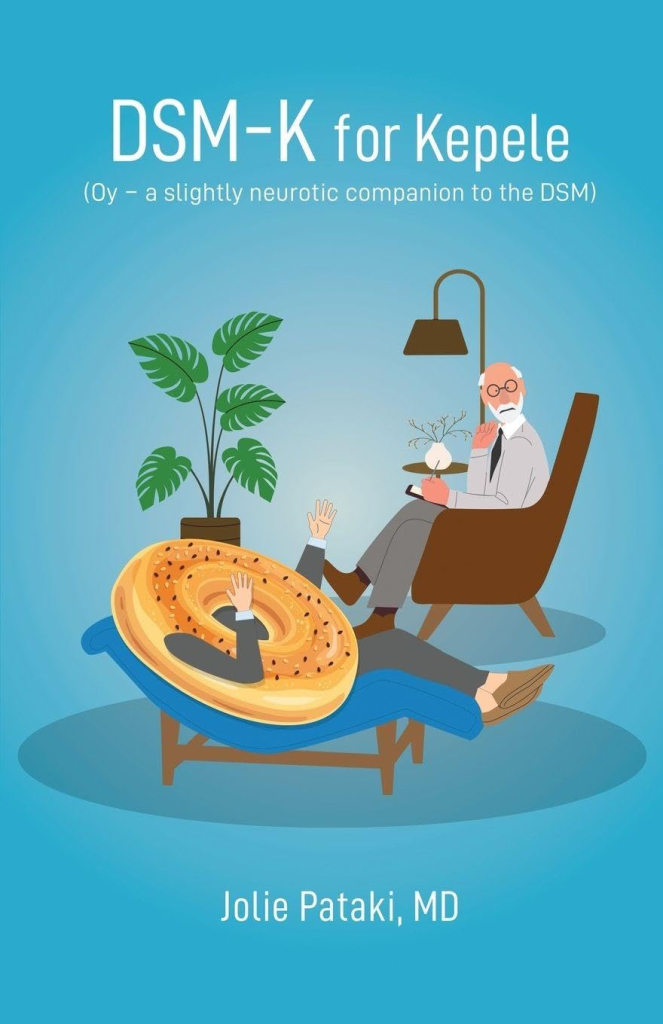
Psychiatry has always been descriptive. A patient comes in, a psychiatrist listens, and together they try to give shape to what is often messy and hard to define. That is where the DSM—the Diagnostic and Statistical Manual—comes in. It lists categories, symptoms, and rules for making sense of mental health. But anyone who has practiced psychiatry knows that these labels can sometimes feel rigid, or even inadequate, to describe the quirks of human behavior.
Instead of dry jargon, Dr. Pataki introduces diagnoses like Kvetch Disorder, Plotz Attacks, and Folie-A-Jew. On the surface, these are jokes. But if you go a little further, you’ll see that they depict Kvetching’s interactions with the world, which are influenced by identity, family, and culture. A “Plotz Attack” may sound funny, but anyone who has ever experienced a sudden rush of anxiety will recognize the feeling. Humor here is not used to dismiss the struggle but to humanize it.
This is why humor belongs in psychiatry. It bridges the gap between clinical detachment and lived experience. Patients do not speak in the language of textbooks. They speak in stories, expressions, and often, jokes. A psychiatrist who can listen with humor gains not only understanding but also trust. By reframing symptoms with a wink and a nudge, Dr. Pataki reminds us that psychiatry is not just about diagnosing disorders. It is about seeing the whole person, mishegos and all.
Humor also reduces stigma. Mental health carries weight in every culture, sometimes too much. By laughing at our quirks, we take away some of the shame that comes with them. DSM-K for Kepele does not deny that conditions like anxiety or depression are serious. But it does allow us to talk about them in a way that feels less intimidating. If you can laugh at your own nudnik moments or admit to a little bit of verklempt behavior, you are already breaking down barriers.
There is another lesson here as well: humor connects people across backgrounds. You don’t have to be Jewish to appreciate the rhythm and warmth of Yiddish expressions. Words like “oy vey” or “mishpoche” have already entered everyday conversation because they speak to universal feelings. When Dr. Pataki names a disorder “Folie-A-Jew” or describes “Shreklach Disorder” as paranoid fear of turning into a big green bulvan, she is inviting everyone into the joke. We laugh because we recognize ourselves in it, no matter our culture.
The role of psychiatry is to make sense of human suffering and help people find a way forward. That task is too important to be stripped of humanity. Humor allows psychiatrists, patients, and readers alike to breathe, to see themselves with compassion, and to remember that even in the darkest times, there can be lightness.
DSM-K for Kepele is a reminder that laughter itself can be therapeutic. Psychiatry may rely on science, but healing often relies on connection and a shared laugh.
Head to Amazon to purchase your copy: https://www.amazon.com/dp/1968966498/.