We all like to think we are normal. But what does “normal” even mean?
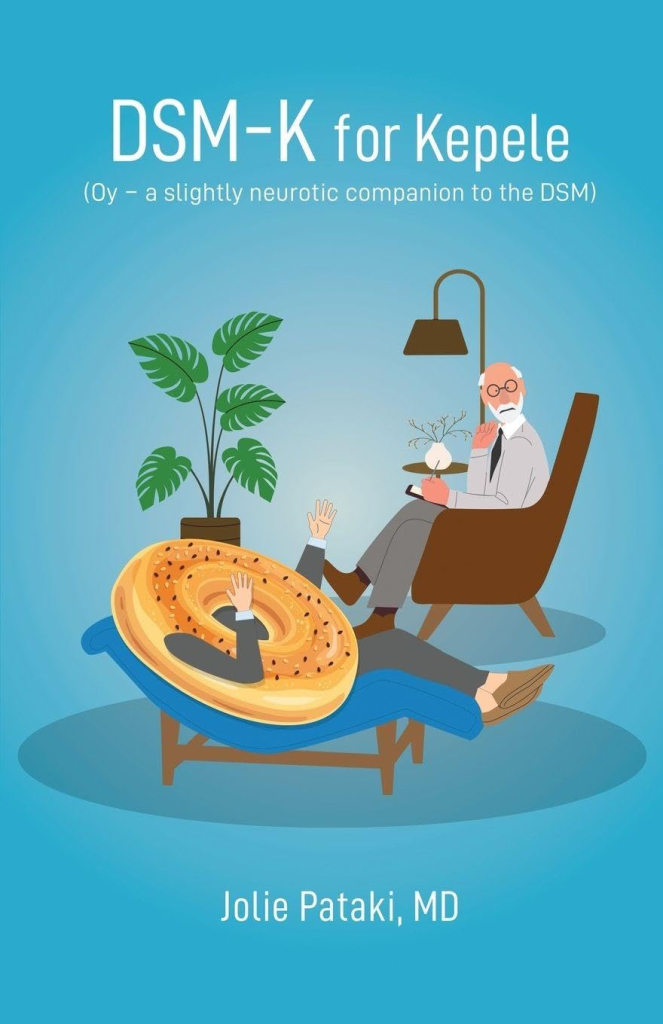
Everyone has quirks, habits, and worries that make them just a little meshugenah. In DSM-K for Kepele, Dr. Jolie Pataki shines a humorous light on these traits by giving them names that come straight out of Yiddish culture. The result is a book that makes us laugh while also reminding us that nobody is perfectly balanced.
Here are five “disorders” from the book you might just see in yourself.
Number one: The Kvetch Disorder
Do you ever find yourself complaining when there really isn’t much to complain about? That’s kvetching, and in DSM-K for Kepele, it gets its own category. Whether it’s grumbling about the traffic, the weather, or your neighbor’s lawn, kvetching is a universal pastime. It can be annoying, but it is also deeply human. Chances are, you’ve had at least a touch of Kvetch Disorder this week.
Number two: Plotz Attacks
Anxiety is no joke, but calling it a “panic attack” feels so clinical. Yiddish gives us something better: Plotz Attacks. The word alone makes you picture someone collapsing under the weight of their nerves. Maybe you’ve had one before an exam, a job interview, or even just a family gathering. If you’ve ever felt like you might just burst from worry, you know exactly what a Plotz Attack feels like.
Number three: The Nudnik Syndrome
We all know a nudnik. It’s that person who repeats themselves endlessly, asks too many questions, or cannot take a hint. Sometimes we are the nudnik without realizing it. In DSM-K, this “syndrome” gets a funny spotlight, reminding us to laugh at those moments when we, too, may be a bit too much. Recognizing your inner nudnik can actually make life lighter—because at least you know you’re in good company.
Number four: The Shpilkes Disorder
Restlessness has a Yiddish name: shpilkes. It describes the jittery feeling of being unable to sit still, always moving, always worrying, always fidgeting. Kids have it, adults have it, and yes, grandparents have it too. If you’ve ever bounced your leg under the table or paced the room when nervous, you’ve probably had a bout of Shpilkes Disorder.
Number five: Folie-A-Jew
Families share more than genes—they often share mishegos. In DSM-K, Dr. Pataki playfully calls it Folie-A-Jew, when an entire family seems to have the same quirk or worry. Think of siblings who all worry too much, or parents and children who all have a flair for the dramatic. It’s not just one person—it’s the whole mishpokhe, and it’s both maddening and hilarious.
You don’t have to be Jewish to recognize these disorders, and you don’t need a medical degree to understand the joke. That is the gift of DSM-K for Kepele. It takes psychiatry, a field that often feels heavy, and adds humor that makes it accessible to everyone.
Reading these playful diagnoses is a reminder that quirks are not flaws. They are part of what makes us human. By laughing at them, we take away their power to isolate us. Instead, we connect over the fact that we all kvetch, we all plotz, and yes, we all have moments of being nudniks.
So the next time you recognize one of these “disorders” in yourself, don’t worry. Laugh about it. Embrace it. And maybe even share it with a friend. After all, as DSM-K for Kepele shows, we’re all a little meshugenah, and that’s nothing to be ashamed of. Head to Amazon to purchase your copy: https://www.amazon.com/dp/1968966498