We all know someone who insists on diagnosing themselves after a quick internet search. The results are usually grim: a headache turns into a brain tumor, and fatigue becomes a life-threatening condition. But what if, instead of doom, the diagnosis brought laughter? That is exactly what happens in Dr. Jolie Pataki’s DSM-K for Kepele, a book that takes the stiff world of psychiatric manuals and reimagines it through the warmth and wit of Yiddish.
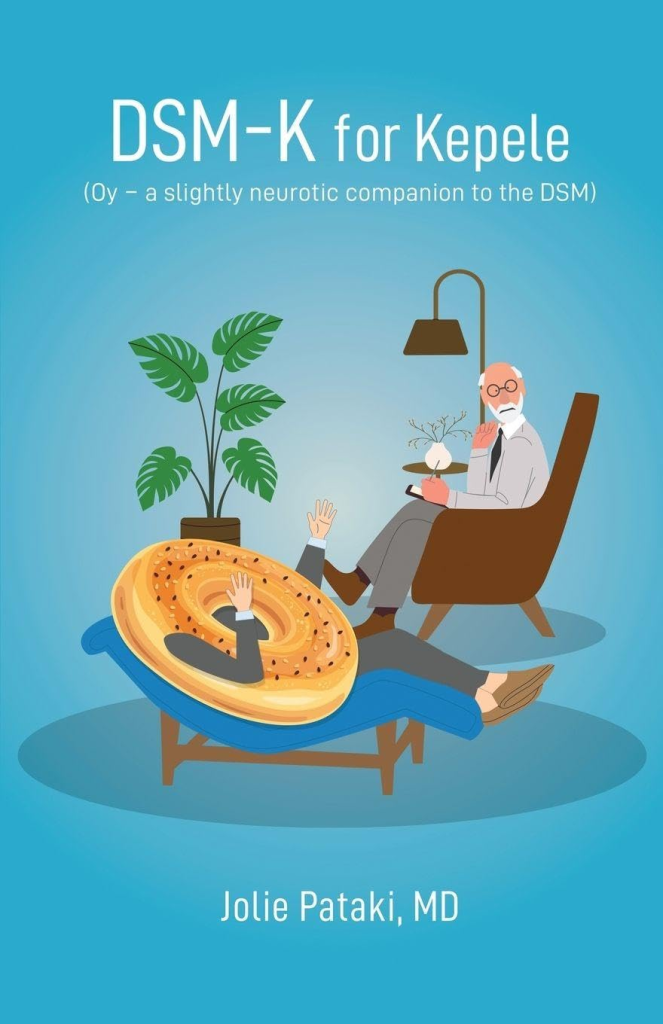
Right from the introduction, the tone is set. Psychiatry, she reminds us, is a field filled with labels, disagreements, and endless attempts to define human behavior. But Yiddish, with its colorful expressions, has long had the right words for things medicine struggles to pin down. Through Dr. Fackacta, her playful alter ego, Pataki builds a diagnostic manual that is more honest than the clinical ones—because it speaks the language of real life.
The disorders themselves are gems. “Nudnik Disorder” is every parent’s nightmare of a child who will not listen, ever. “Shreklach Disorder” is paranoia taken to hilarious extremes, with visions of turning into a “big green bulvan.” “Post Traumatic Shlepping Disorder” might be a joke, but anyone who has survived a marathon shopping trip will nod in weary recognition. Each page is a mix of laughter, cultural recognition, and sharp insight into human behavior.
What makes the book captivating is how it respects the reader. It does not talk down, nor does it hide behind clinical walls. Instead, it invites us in, lets us laugh, and reminds us that we are all carrying a little meshugenah within us. And because humor is universal, the book does not just speak to Jewish readers. Anyone who has struggled, complained, or gotten lost in their own head will see themselves reflected here.
There is also a tenderness beneath the humor. By reimagining diagnoses through Yiddish, Dr. Pataki reminds us that culture and family stories are as much a part of mental health as any symptom list. We are not just patients—we are people with histories, quirks, and a whole lot of shtik. That is why reading this book feels like sitting at a family table where laughter and love flow together.
After you find yourself laughing at Kvetch Disorder or identifying a little Shpilkes in yourself, you can’t help but wonder: If humor can so effectively capture us, perhaps it also conceals something more profound. If so, what other aspects of yourself are lurking in these pages, cloaked in humor, just waiting to catch you off guard?
So, are you ready to explore more and be amazed? Head to Amazon to purchase this book and embark on a breathtaking and hilarious expedition that will keep you glued and laughing out loud.
Here is a link to the book: https://www.amazon.com/dp/1968966498/.
DSM-K for Kepele by Dr. Jolie Pataki is a witty reimagining of psychiatry told through the warm, expressive humor of Yiddish. With her alter ego Dr. Fackacta, Pataki draws on more than 30 years of psychiatric practice and a lifetime of Jewish culture to create playful “diagnoses” like Kvetch Disorder, Plotz Attacks, and Folie-A-Jew. More than parody, this book is a celebration of human quirks, family mishegos, and the universal need to laugh at ourselves. Blending humor with insight, it makes mental health approachable while honoring the richness of Yiddish culture. Whether you are a mental health professional, a lover of Jewish wit, or simply someone who enjoys a good “oy vey,” this book promises laughter, recognition, and plenty of aha moments.