We spend a lot of time trying to appear normal, we really do… We organize our schedules, polish our resumes, and keep our quirks hidden away from others just to pretend and be normal. And all for what? Just to be accepted by society, even at the cost of mental health.
But the truth is, life would be unbearably dull if everyone were perfectly balanced all the time. A little bit of mishegos (what Yiddish calls meshugenah) is what makes people interesting. Having a bissel meshugenah in your life might be one of the healthiest things you can do.
Think about your family or your friends. Chances are, the people you remember most vividly are not the ones who were always calm and predictable. They are the ones who told the same story a dozen times, made a scene over nothing, or laughed at their own jokes before finishing them. These are the meshugenah moments that create joy, memories, and connection. Without them, life would feel flat.
Psychiatry often focuses on identifying what is out of balance. That is important, but it can miss the value of quirks. A friend who is a little dramatic, a cousin who kvetches constantly, or a neighbor who worries too much might not be “problems” to solve. They might be the color in our lives, reminding us that imperfection is part of being human. Instead of trying to fix every bit of meshugenah, maybe we should celebrate it.
Having a bissel meshugenah in your life also teaches patience and empathy. When someone’s quirks get on your nerves, you learn how to adjust, forgive, and laugh it off. These small acts of acceptance build stronger relationships. They remind us that love is not about tolerating only the easy parts—it’s about embracing the full package, quirks and all.
There is also comfort in realizing that we all have meshugenah inside us. Nobody is perfectly calm, rational, or balanced. Admitting this makes it easier to be gentle with ourselves. Instead of asking “What is wrong with me?” we can say, “This is just my bissel meshugenah showing.” Humor turns self-criticism into self-acceptance.
The beauty of Yiddish is that it gives us words to celebrate this truth. Meshugenah is not just “crazy.” It’s endearing, funny, and deeply human. When we describe someone this way, we are not shaming them—we are recognizing the spark that makes them unique. It’s a reminder that quirks can be lovable, not shameful.
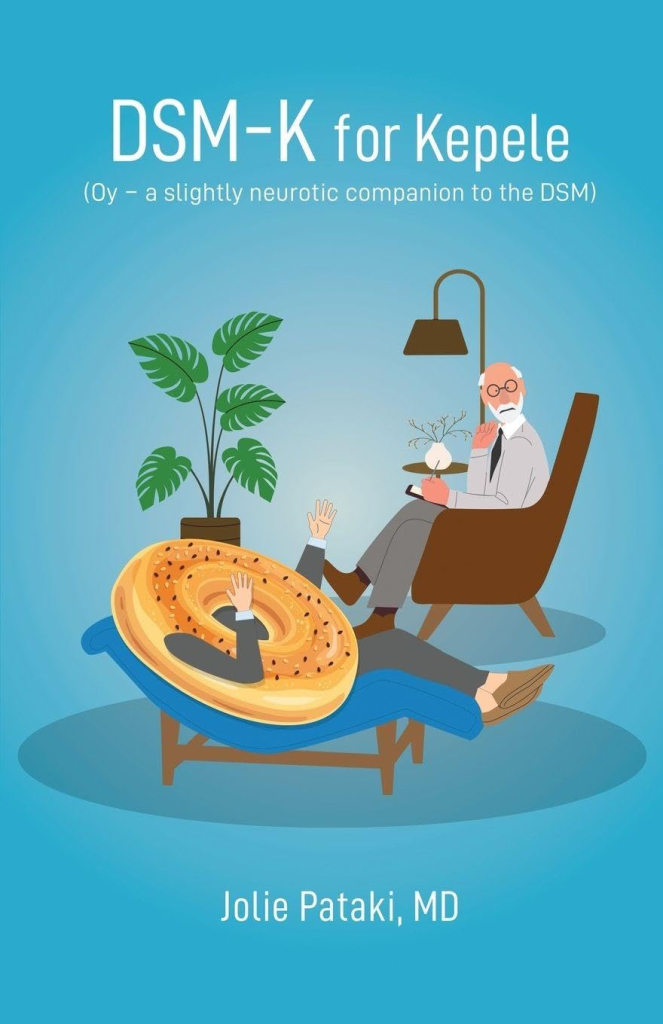
Dr. Jolie Pataki’s DSM-K for Kepele builds on this idea by reframing psychiatric language through humor. With playful “diagnoses” like Kvetch Disorder and Plotz Attacks, she shows that quirks are not just clinical labels—they are shared experiences we can laugh about together. The book proves that having a bissel meshugenah is not just common, it is worth celebrating.
So why should everyone have a bissel meshugenah in their life? Because it keeps us honest, connected, and entertained. It teaches us empathy, makes us laugh, and reminds us that normal is overrated. It is okay to have quirks. It is something that will restore our trust in life and God and help us to achieve a certain level of mental peace that comes with the assurance that: Life is richer when we embrace the quirks that make us who we are.
If you need proof, spend some time with DSM-K for Kepele. You’ll laugh, you’ll nod, and you’ll recognize yourself and the people you love in its pages. And by the end, you might just be grateful for every bissel meshugenah in your own life.
Here is a link to purcashe your copy: https://www.amazon.com/dp/1968966498.