We all know that Psychiatry is a serious field. It deals with anxiety, depression, trauma, and all the heavy burdens of the human mind. But serious does not have to mean joyless, boring, and even at times life-threatening.
In fact, several studies concluded that having a little humor in life and about its challenges has always been one of the best tools for coping with life’s difficulties. It breaks tension, opens conversations, and makes struggles feel less isolating. In psychiatry, humor is not a replacement for treatment, but it can be a powerful bridge between people and their own experiences.
Think about how humor works in daily life. For example, when someone trips, they laugh it off instead of feeling embarrassed. When families argue, a joke can calm the mood. When people feel anxious, humor can remind them that they are not alone in their struggle. These small examples show how laughter is often the first step toward healing. Psychiatry, at its core, is about helping people face the parts of themselves that feel heavy. Humor lightens the load and makes it possible to start talking.
One of the main barriers in psychiatry is stigma, as people hesitate to seek help because they feel shame about their quirks or symptoms. Humor reduces that stigma. When someone laughs at their own worry or recognizes their habits in a funny description, they are more willing to admit what they are going through. Humor makes disorders approachable instead of frightening.
Another reason humor is needed in psychiatry is connection. Where clinical terms can create distance, words like “generalized anxiety disorder” or “major depressive episode” sound heavy and abstract. But if someone says, “I’m having a plotz moment” or “I’m a little meshugenah today,” people instantly understand and connect. This subtle use of language and humor turns symptoms into stories and also invites others to nod, smile, and say, “Me too.”
Humor also humanizes professionals. For instance, psychiatrists, psychologists, and therapists often carry the weight of their patients’ stories. Humor gives them relief, too. When doctors and patients can laugh together, it builds trust and shows that healing is not only about medication or therapy—it is also about connection and humanity.
Of course, humor cannot replace treatment. But it can be part of the process. It can open the door for people who might otherwise stay silent. It can make clinical settings feel less intimidating. And it can remind everyone involved that mental health is not about being perfect—it is about being human.
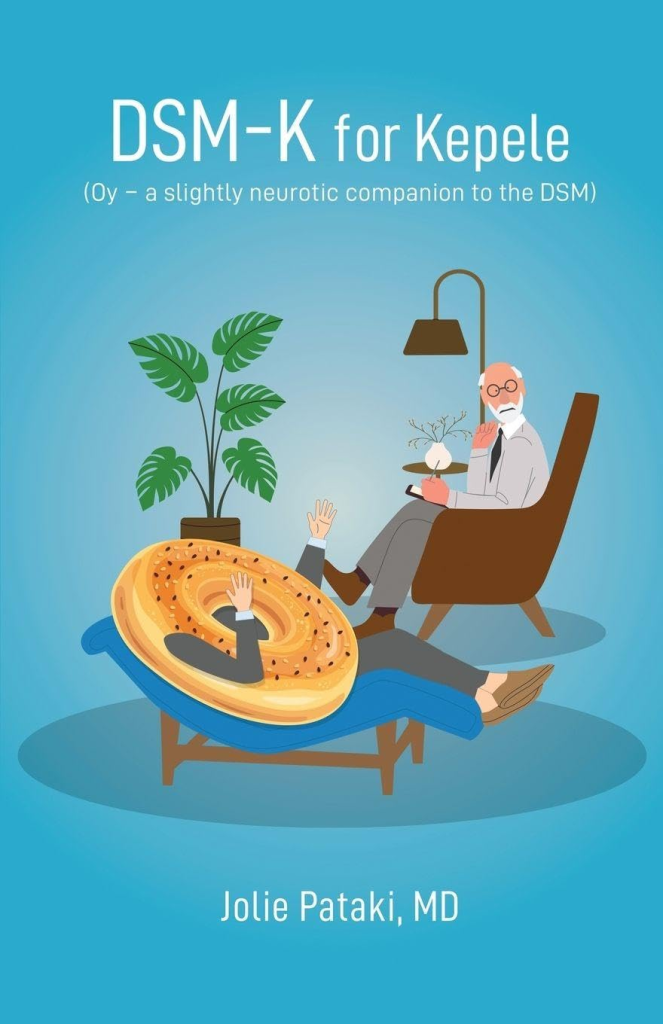
This is the strength of Dr. Jolie Pataki’s book DSM-K for Kepele. Through her humorous take on psychiatric diagnoses, she demonstrates how humor can bring psychiatry down to earth. By describing conditions with Yiddish expressions, she invites readers to laugh at themselves and their families while realizing they are not alone. The message is simple: psychiatry and humor can go hand in hand, and sometimes a bissel laughter is the best medicine.
Head to Amazon to purchase your copy: https://www.amazon.com/dp/1968966498.
DSM-K for Kepele is a witty, one-of-a-kind fusion of psychiatry and Yiddish culture from the mind of Dr. Jolie Pataki, a psychiatrist with over 30 years of experience-and a Jew for more than twice as long. Through the humorous lens of her alter-ego, Dr. Fackacta, she offers a fresh (and hilarious) take on mental health diagnoses, replacing clinical jargon with the most accurately descriptive language ever spoken: Yiddish.
With tongue-in-cheek “disorders” like Kvetch Disorder, Plotz Attacks, and Folie-A-Jew, Dr. Pataki pokes fun at the quirks of human nature, psychiatric practice, and cultural traditions alike. Whether you’re a mental health professional, a lover of Jewish humor, or just someone who appreciates a good “oy vey,” this book delivers insight and laughs in equal measure.
Packed with cultural references, clever definitions, and compassionate wit, DSM-K for Kepele is more than a parody-it’s a celebration of the richness (and ridiculousness) of human behavior. Read it, share it, and maybe even self-diagnose-at your own risk, of course.